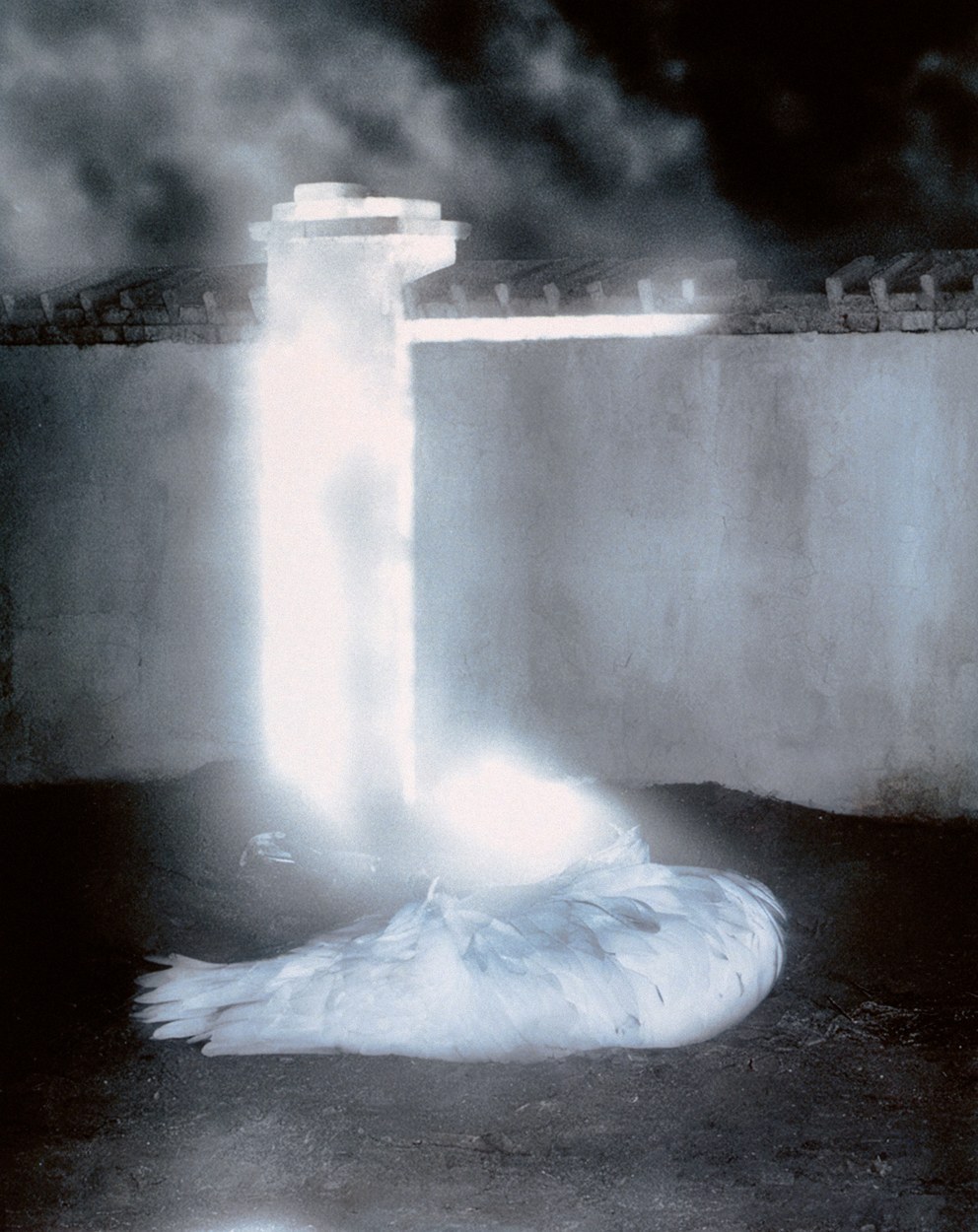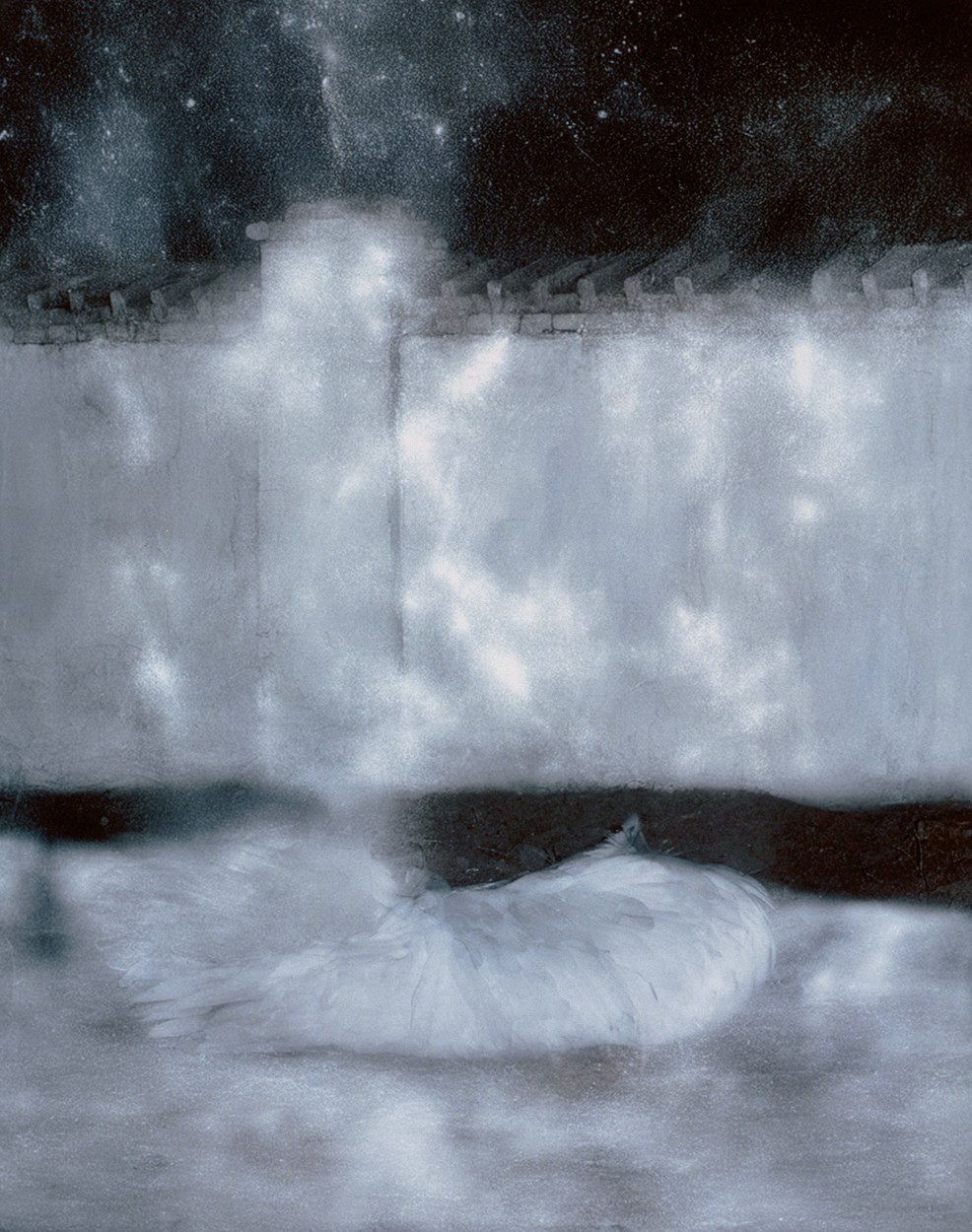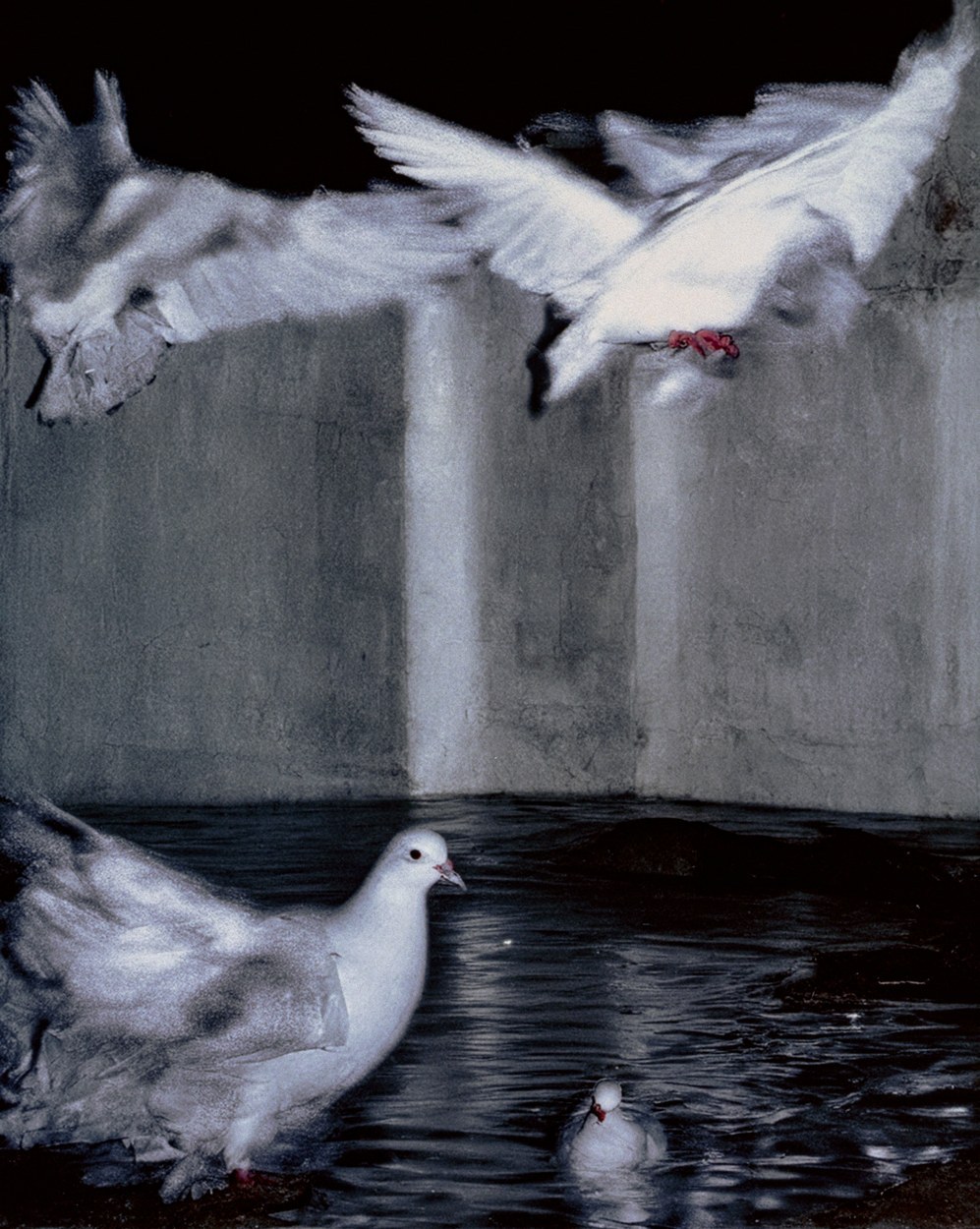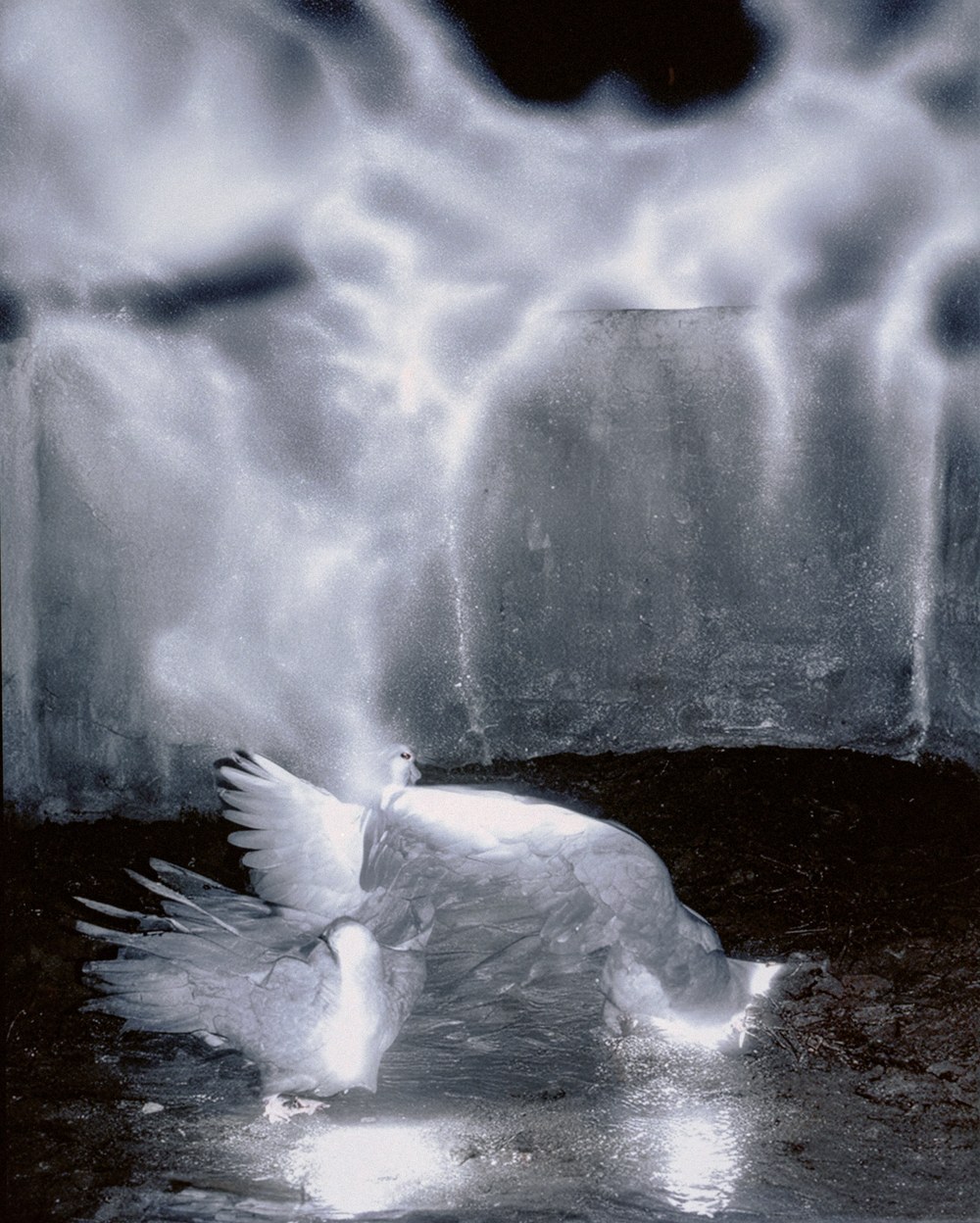
《Pong Ligeon》
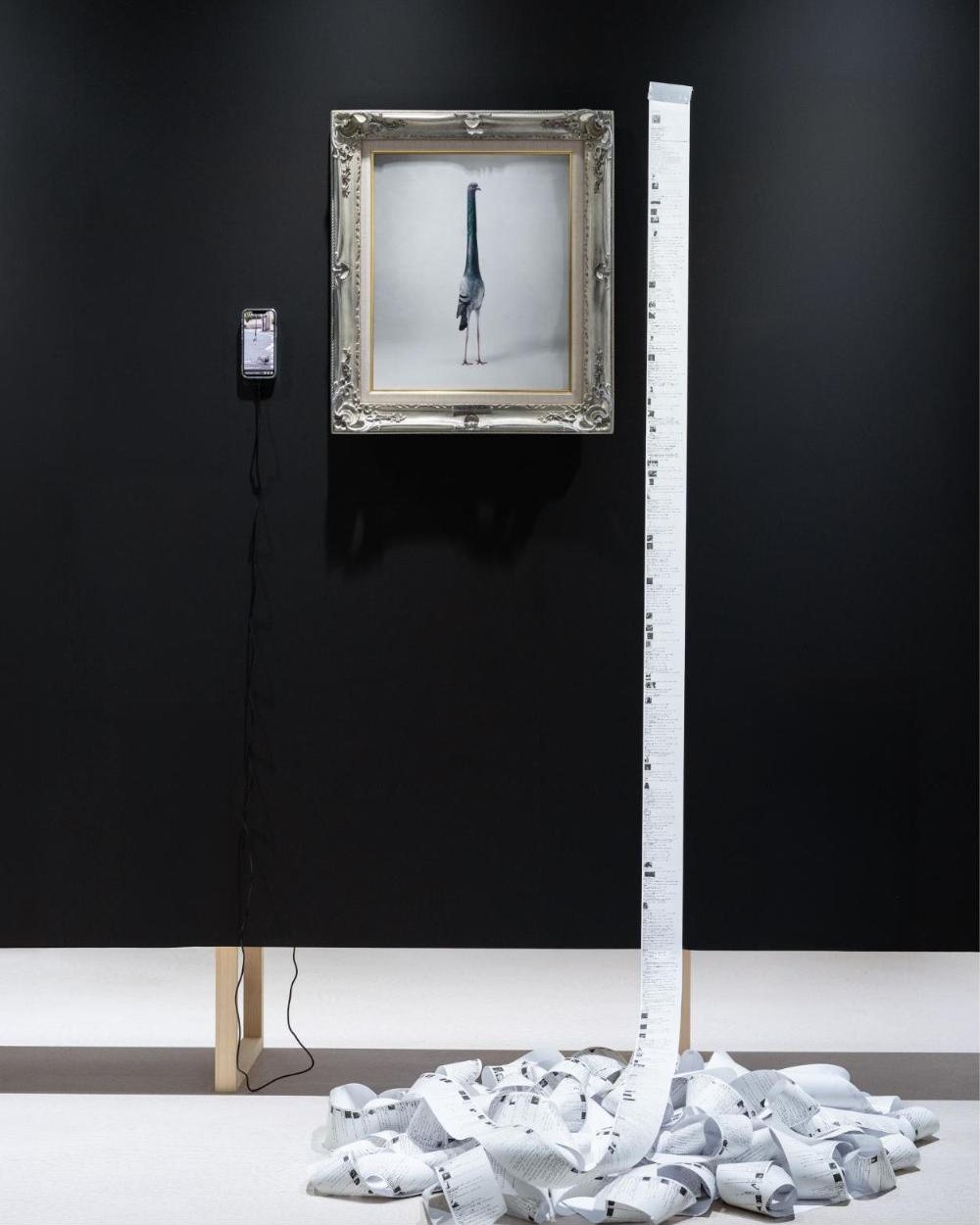
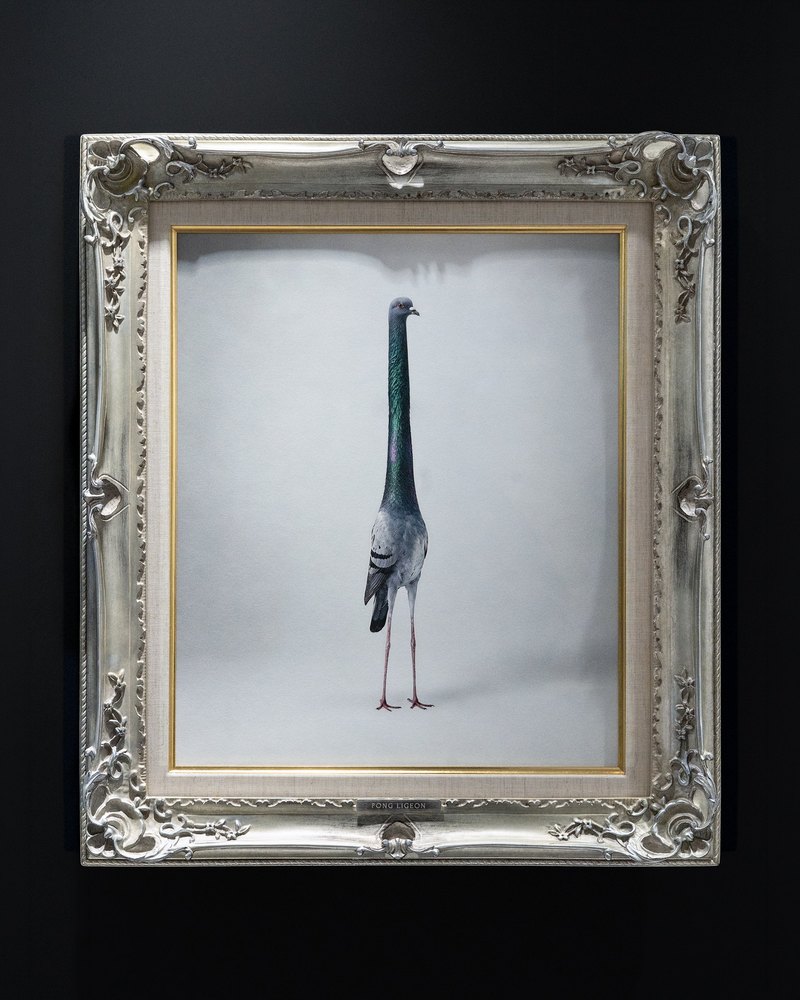
Pong Ligeon, 2026
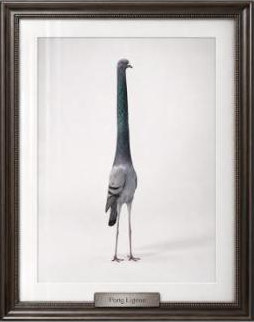
AI-generated image, inkjet print in secondhand silver rococo frame, engraved steel nameplate, original TikTok video on iPhone (loop), and its comments printed on 67 m of thermal receipt paper
Dimensions variable; framed element 64 × 57 × 7 cm
Edition of 1; private collection
Installation view, Before Meaning / 原風景, curated by Kenta Cobayashi, CO-CROSSOVER: Romantic beyond us (earth), MEET YOUR ART FESTIVAL 2026, Terrada Warehouse D HALL, Tennoz, Tokyo, 9–12 October 2026
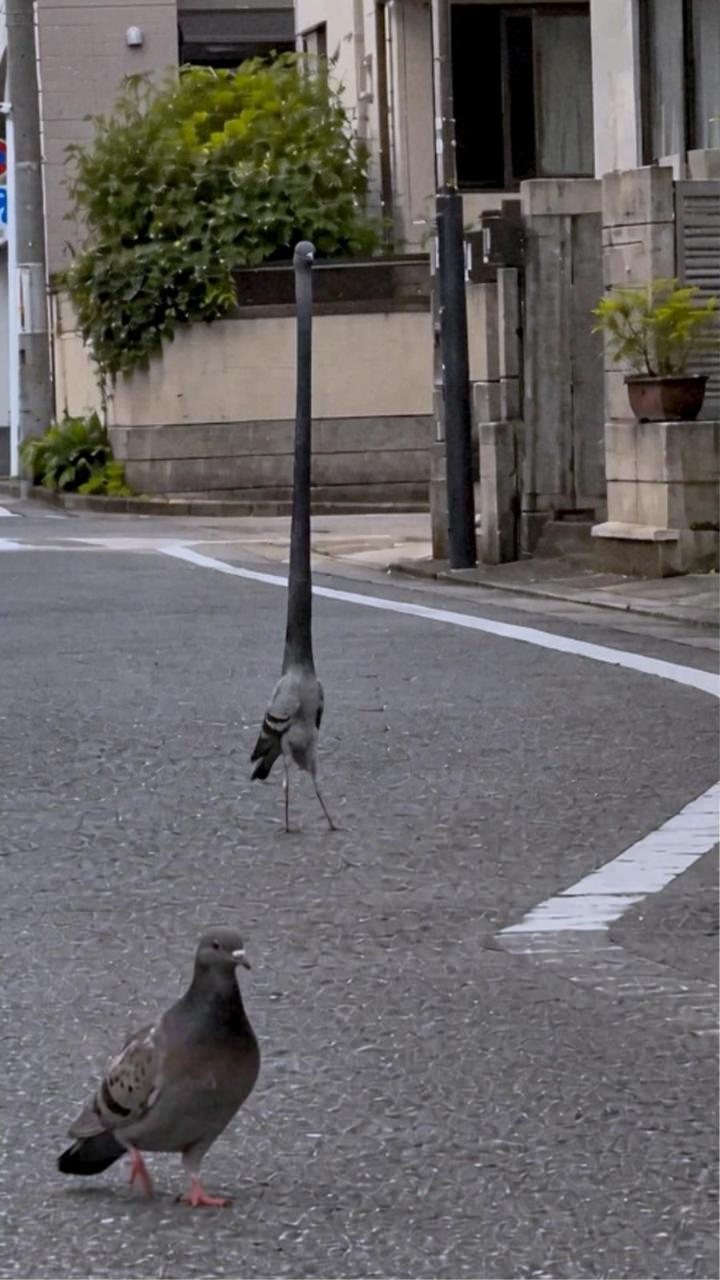
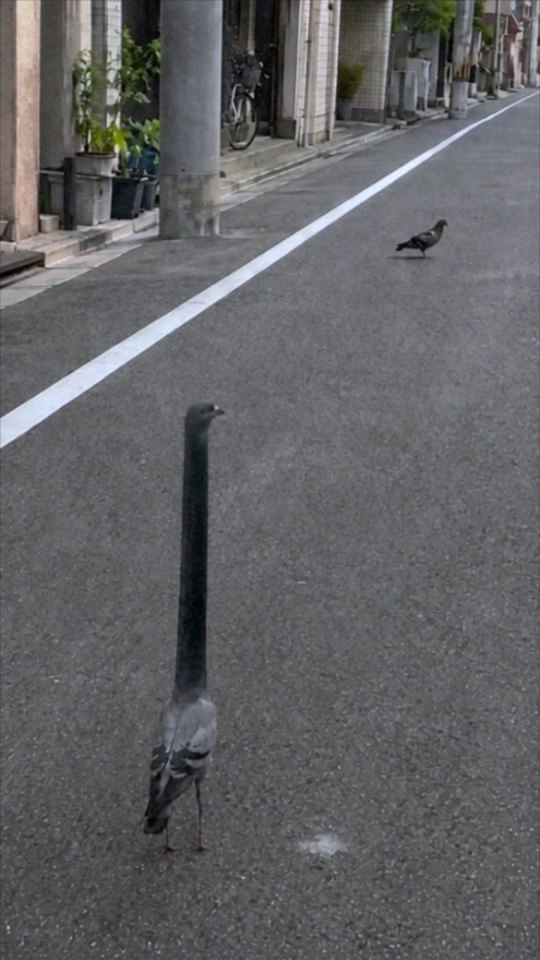
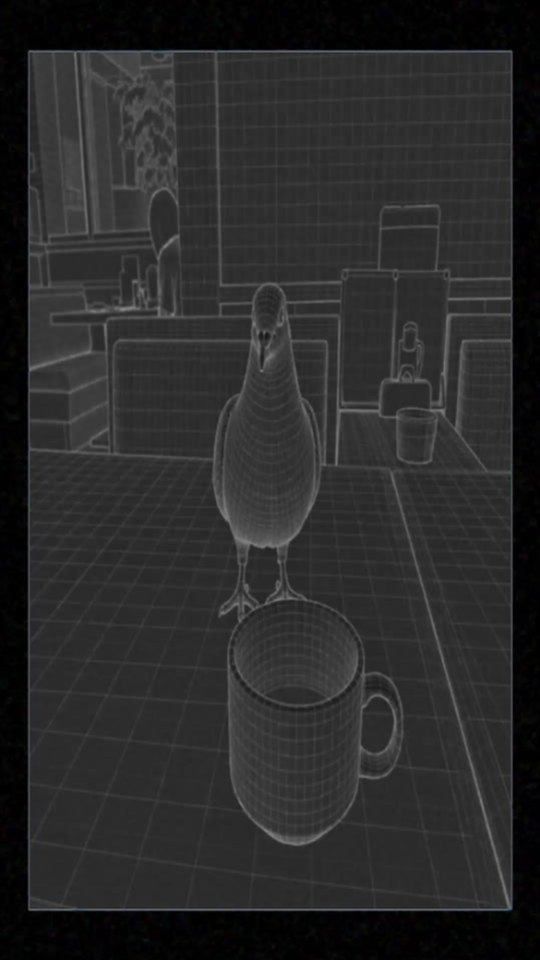
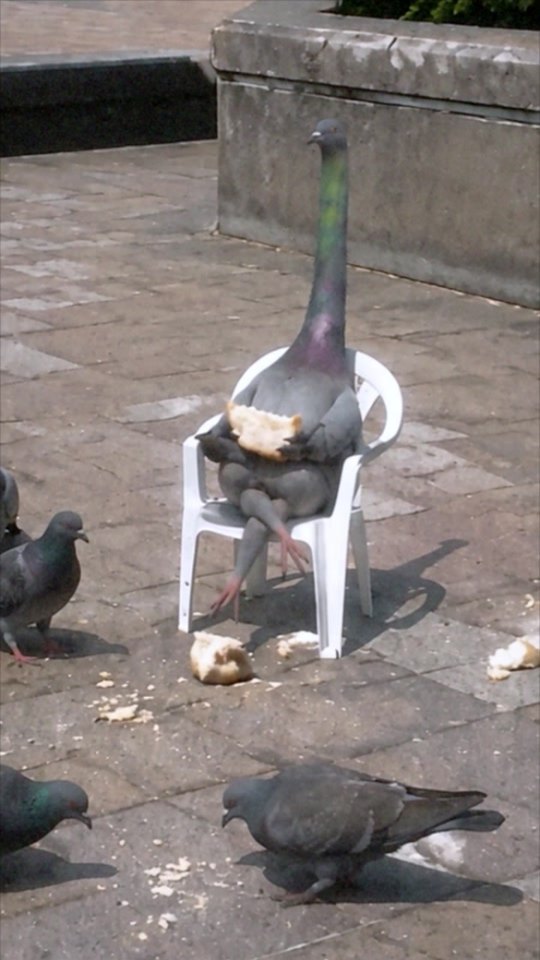
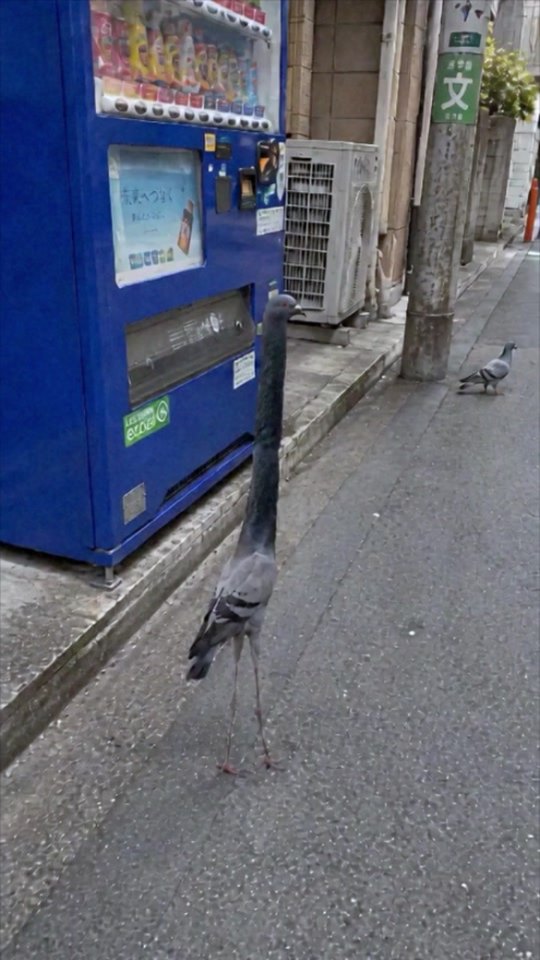
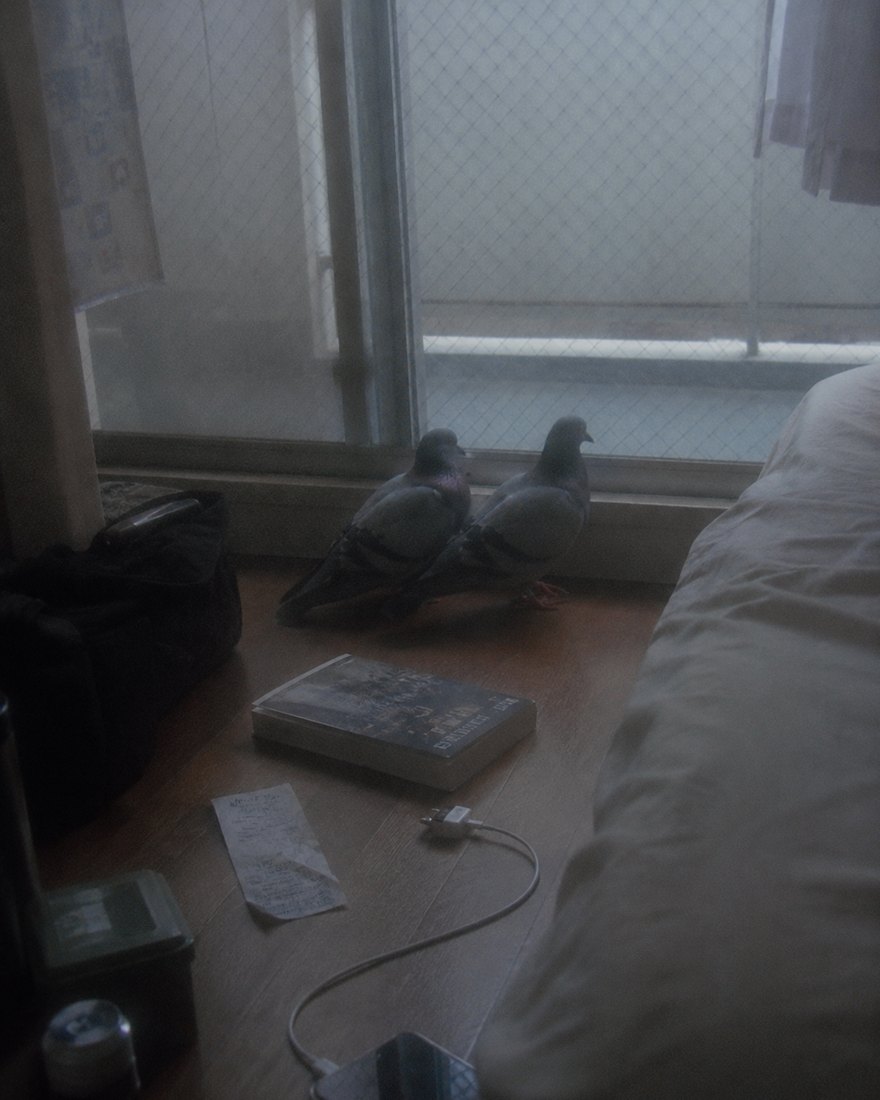
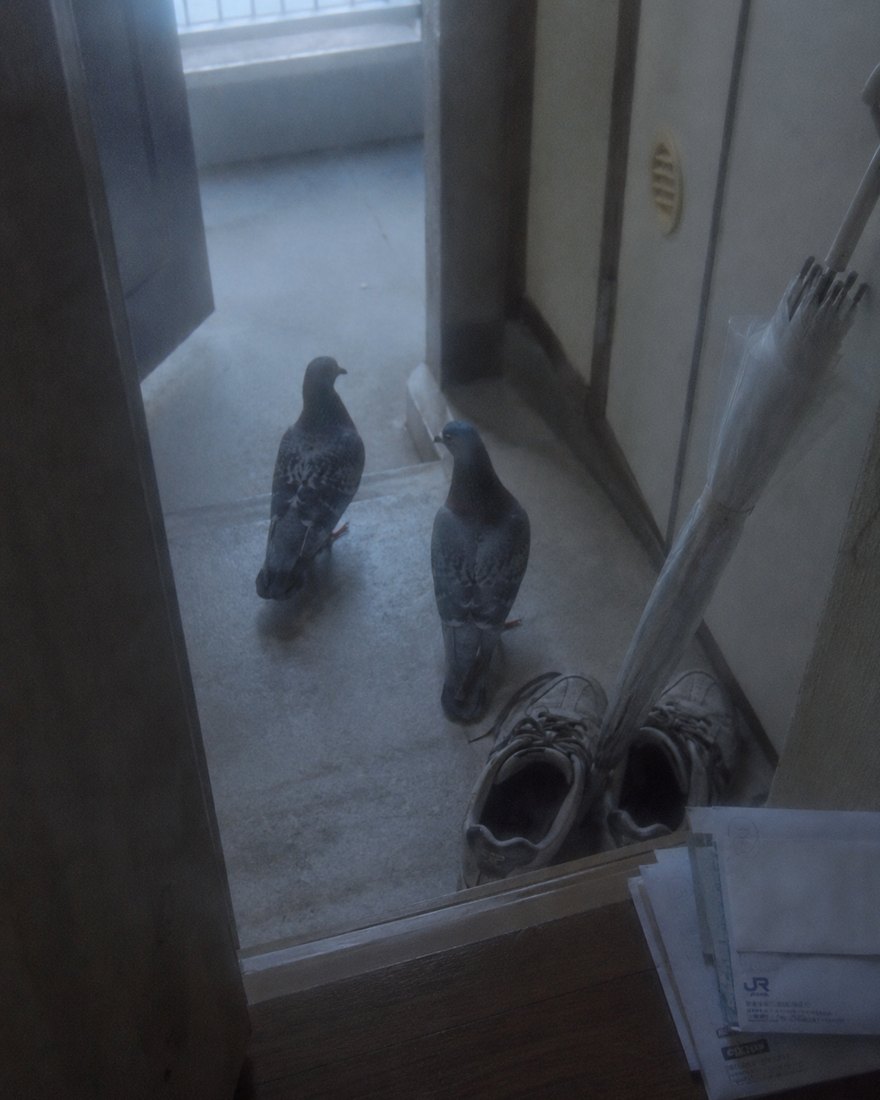
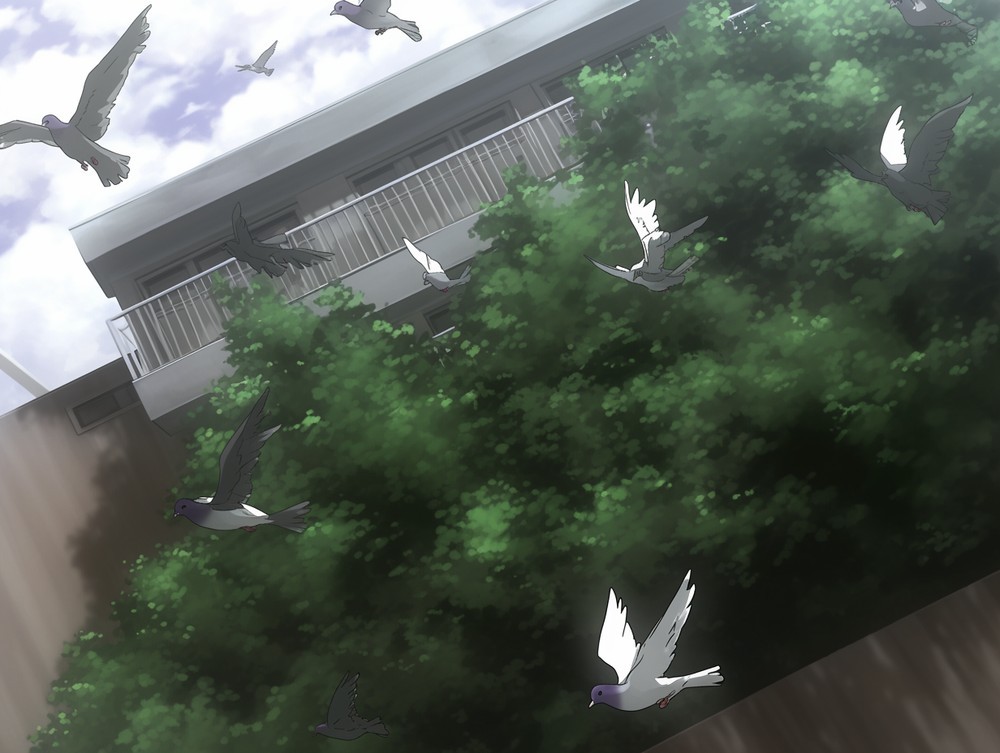
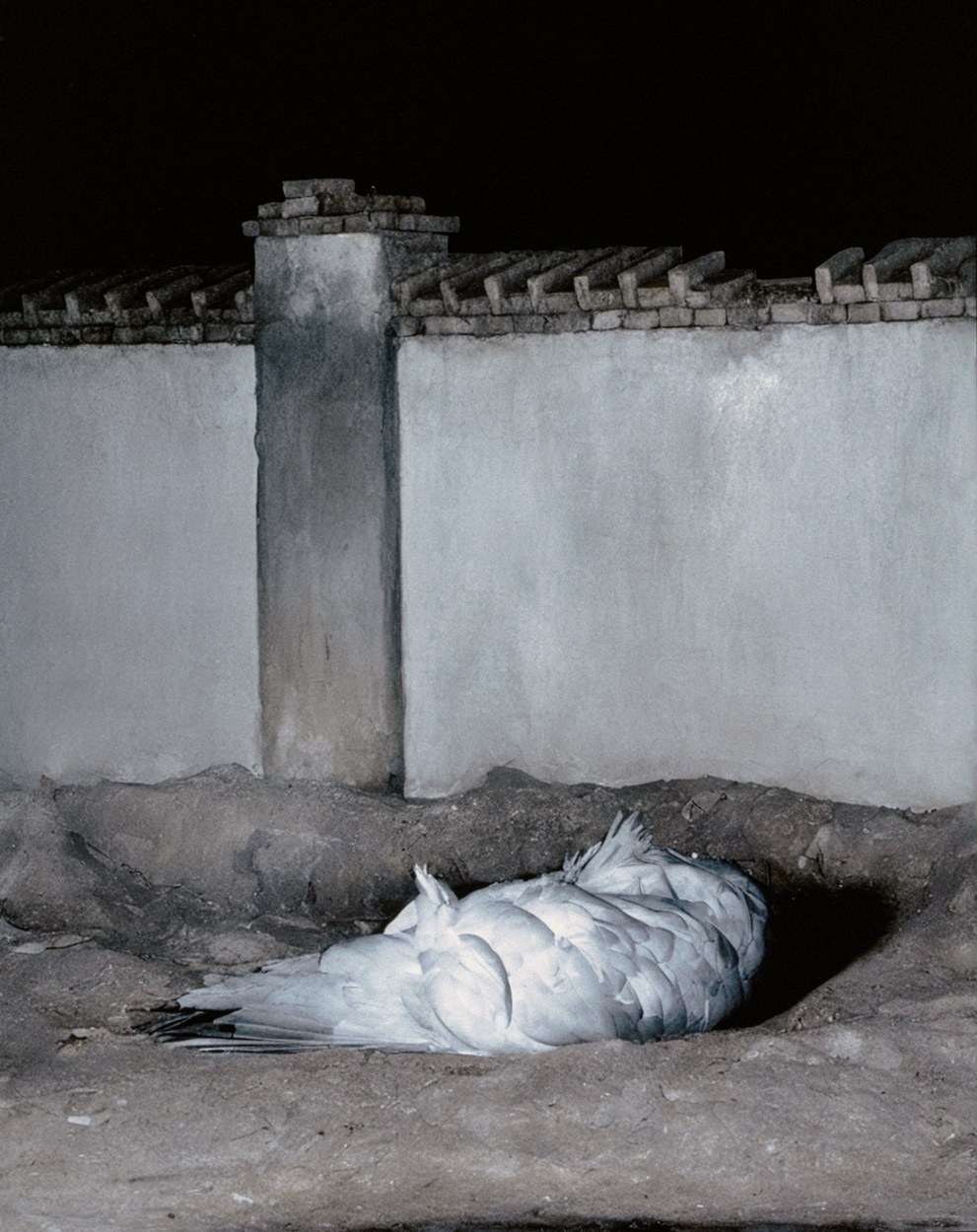
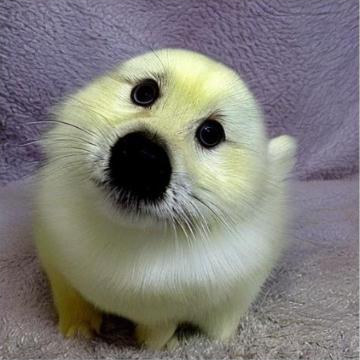
首が異様に長い鳩の短い動画をTikTokに投稿した。AIで作ったことは見ればわかる。それでもコメント欄では、これを本物として扱う遊びが始まった。ルールは誰も書いていないが、はっきりしている。真贋の根拠に首は使わない。AI的な違和感は色味や足の長さ、果ては手前を歩く普通の鳩に向けられ、一番ありえない首だけが前提として受け入れられる。真贋は昔から、顔ではなく耳や手の細部で決まる。そのうえで「最近あまり見ない」「そんな日もある」と、いる前提の目撃談が続く。真面目に「これはAIですか」と聞いた人にはほとんど反応がつかず、「あ、AIなんだ。家にも同じ鳩いるから分からんかった」と芝居を続けた人に賛同が集まる。嘘を見抜く遊びではない。嘘だとわかったうえで、どこまで乗れるかを競う遊びが行われていた。首の長い鳩のイメージそれ自体より、その受け取られ方の方が面白かった。
名前もこの遊びの中で決まった。「long pigeon」の頭文字を入れ替えて遊ばれた「Pong Ligeon」。自分が付けた名前ではなく、見た人がふざけて呼んだ名前をそのままタイトルにして、銘板に刻んだ。刻んだ時点で、冗談が本名になる。後に調べると「Pong」とはイギリス英語の口語で「悪臭」を意味するらしい。
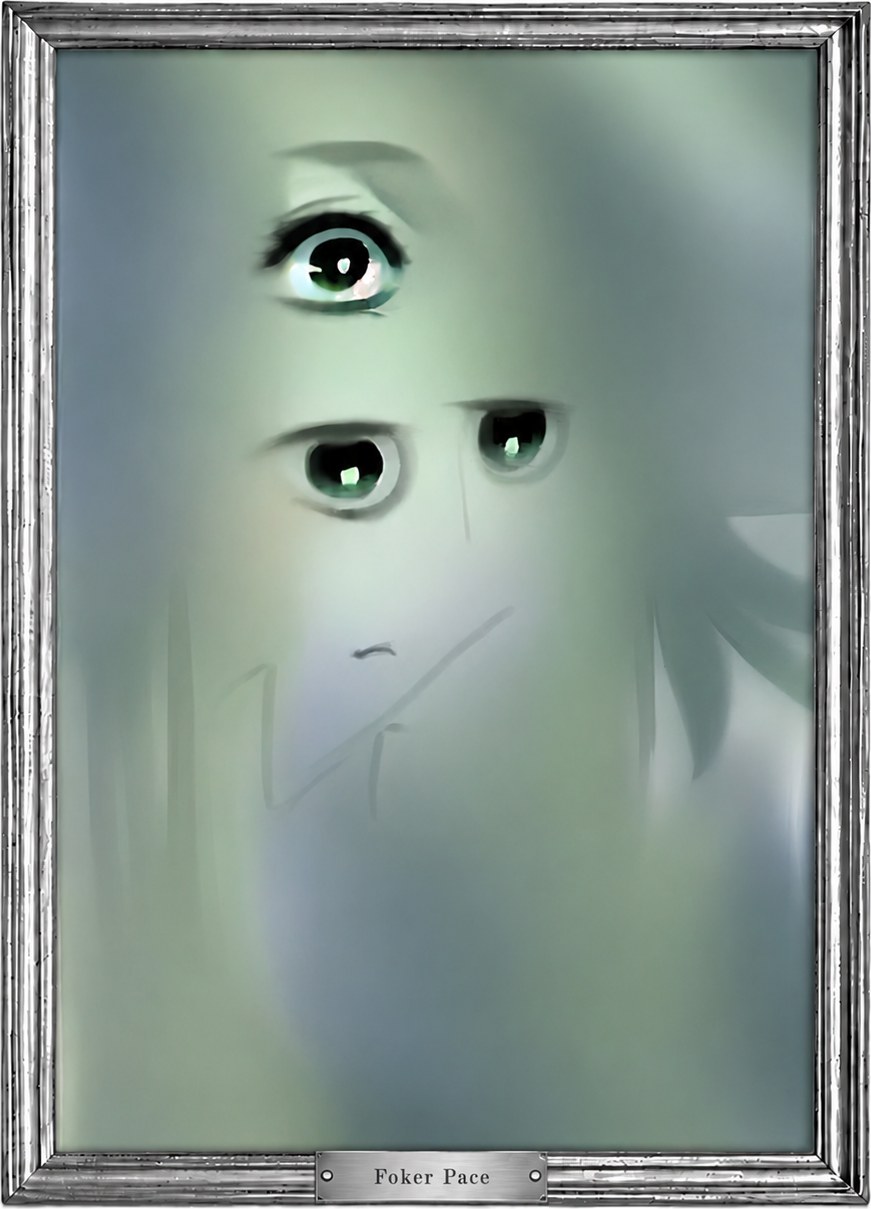
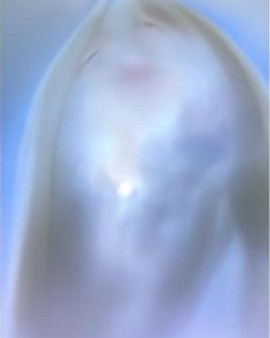
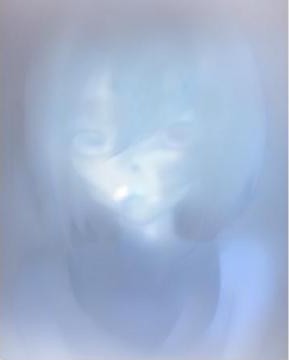
額は銀のアンティーク調の装飾額で、肖像画が入っていそうなものをメルカリで探して買った。中に入れたのは油彩の肖像ではなく、白い背景の前に立たせたポートレート写真のような一枚。肖像画の額は名前のある誰かのためのもので、白背景の写真は、人でも商品でも標本でも同じ条件で写すためのもの。その二つのズレた形式のあいだで、鳩が一羽、なんでここにいるんだろうという顔で立っている。理屈より先に、その場違いさがよかった。
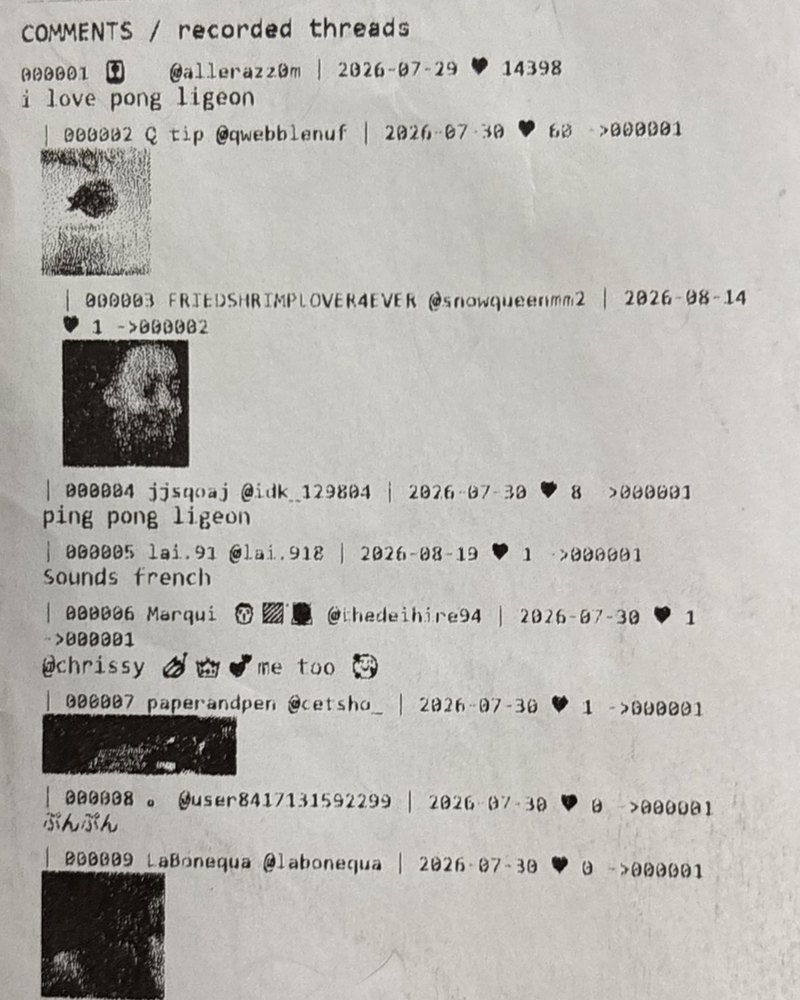
額の横で元の動画をiPhoneでループ再生し、約8000件のコメントを80mm幅の感熱レシート紙に67m分印刷した。レシートは取引があったことの証憑だ。ここでは一つ一つのコメントを、鳩がいたことへの署名として扱っている。冗談だとわかったうえで書かれた「いた」を、冗談だとわかったうえで受理する。写真は本来、何かがそこにあったことの証拠だった。ここでは証拠の方が先にあり、写真はあとから額に入った。
鳩を作ったのは自分だが、名前を付けたのも、いたことにしたのも、見た人たちだ。存在しなかった鳥が、知っていた人たちの連署で、いたことになった。
I posted a short video of a pigeon with an abnormally long neck on TikTok. Anyone could see it was made with AI. Even so, a game began in the comments of treating it as real. No one wrote the rules down, but they are clear. The neck is never used as evidence. Suspicion of AI is aimed at the color, the length of the legs, even the ordinary pigeon walking in the foreground, while the neck, the least possible thing in the picture, is accepted as a given. Authenticity has always been decided not by the face but by details like ears and hands. Then come sightings that take the bird’s existence for granted: “haven’t seen it around lately,” “some days are like that.” People who earnestly asked “Is this AI?” got almost no response, while likes gathered around those who kept up the act: “Oh, it’s AI? I couldn’t tell, we have the same pigeon at home.” This was not a game of exposing a lie. It was a game of seeing how far you could play along with something you knew was a lie. What interested me was less the image of a long-necked pigeon than the way it was received.
The name was settled inside this game too. “Pong Ligeon” came from viewers playing with “long pigeon” by swapping the first letters. It is not a name I gave it. I took what viewers called it as a joke, made that the title, and engraved it on the nameplate. Once engraved, the joke becomes the real name. I later learned that “pong” is British slang for a bad smell.
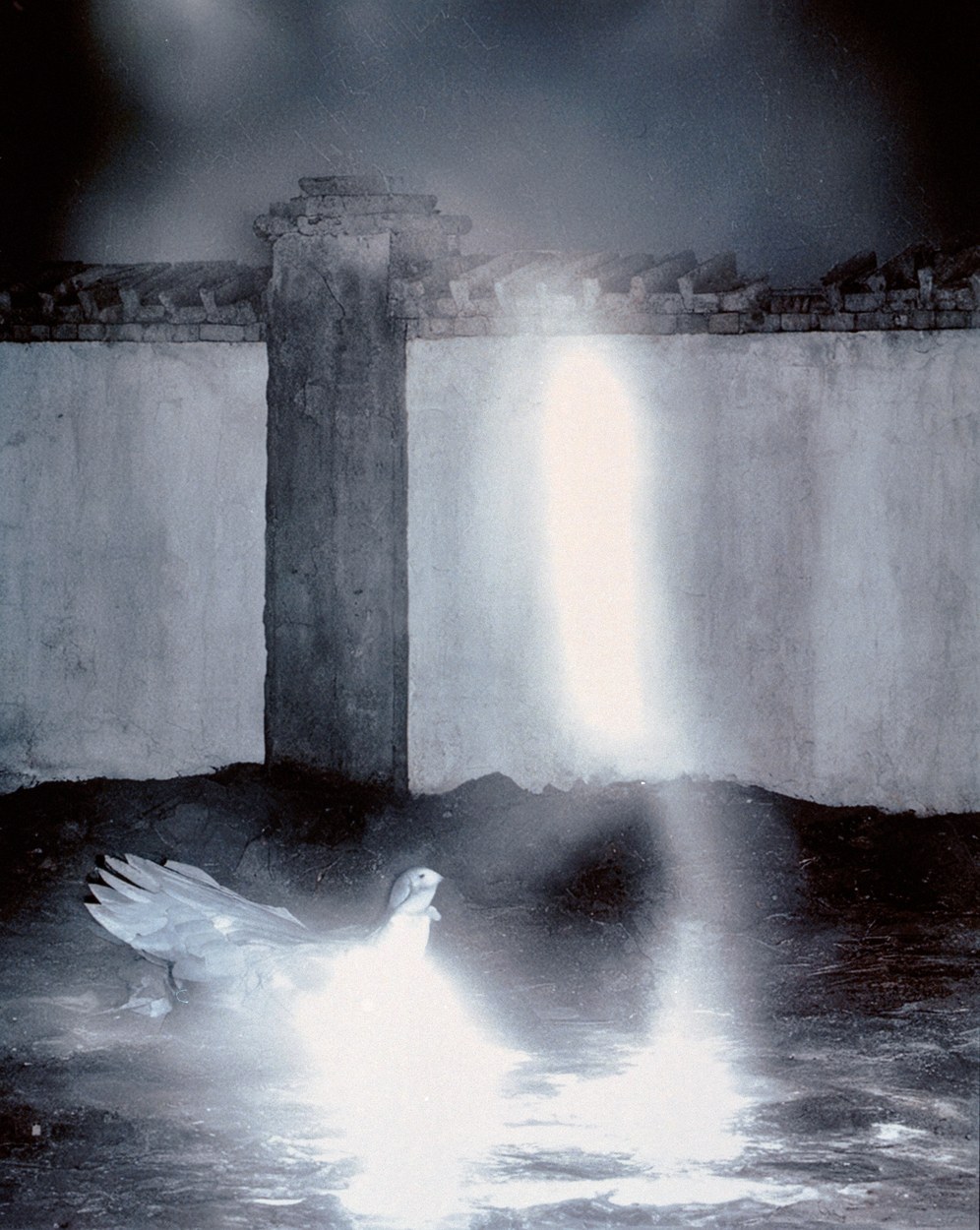
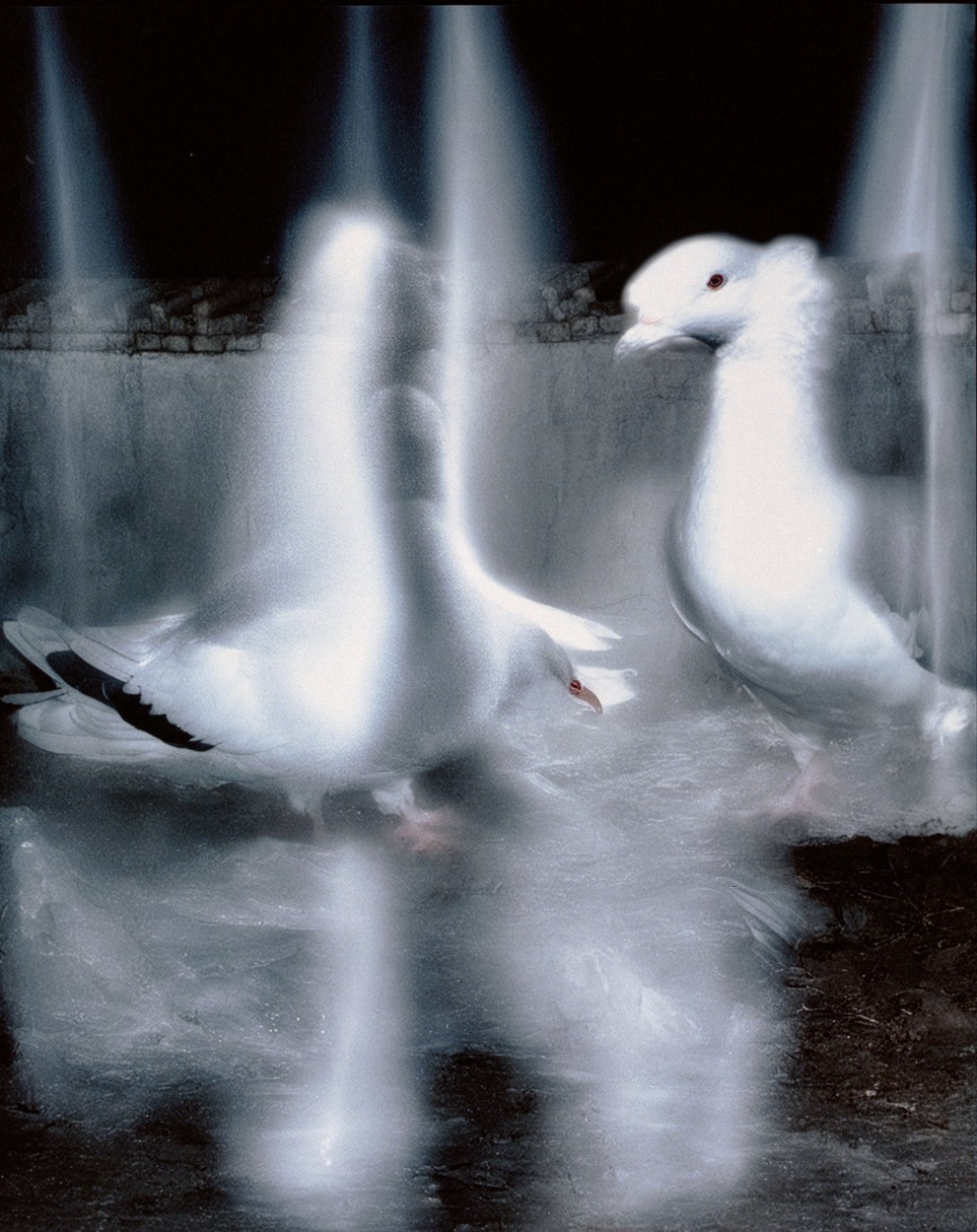
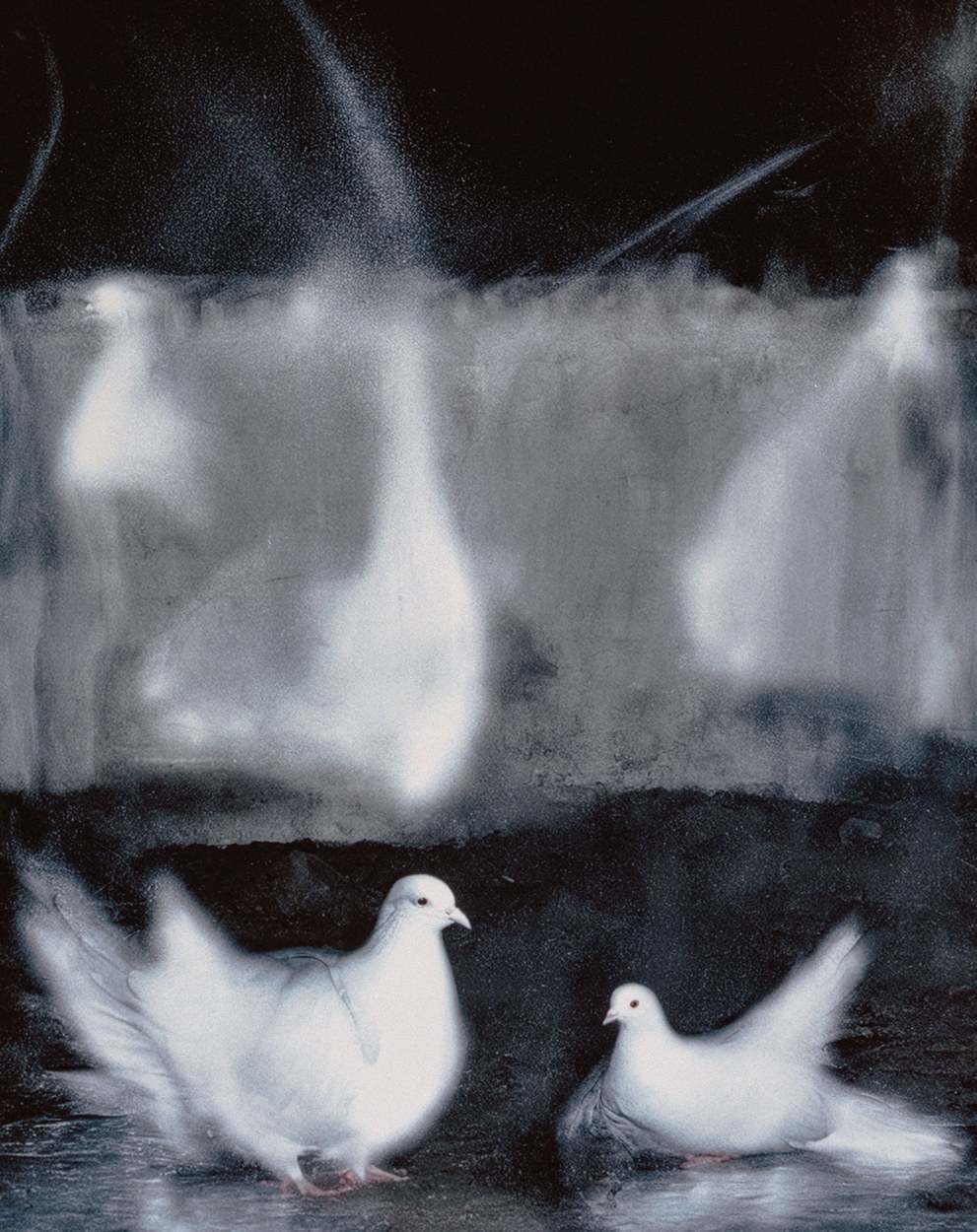
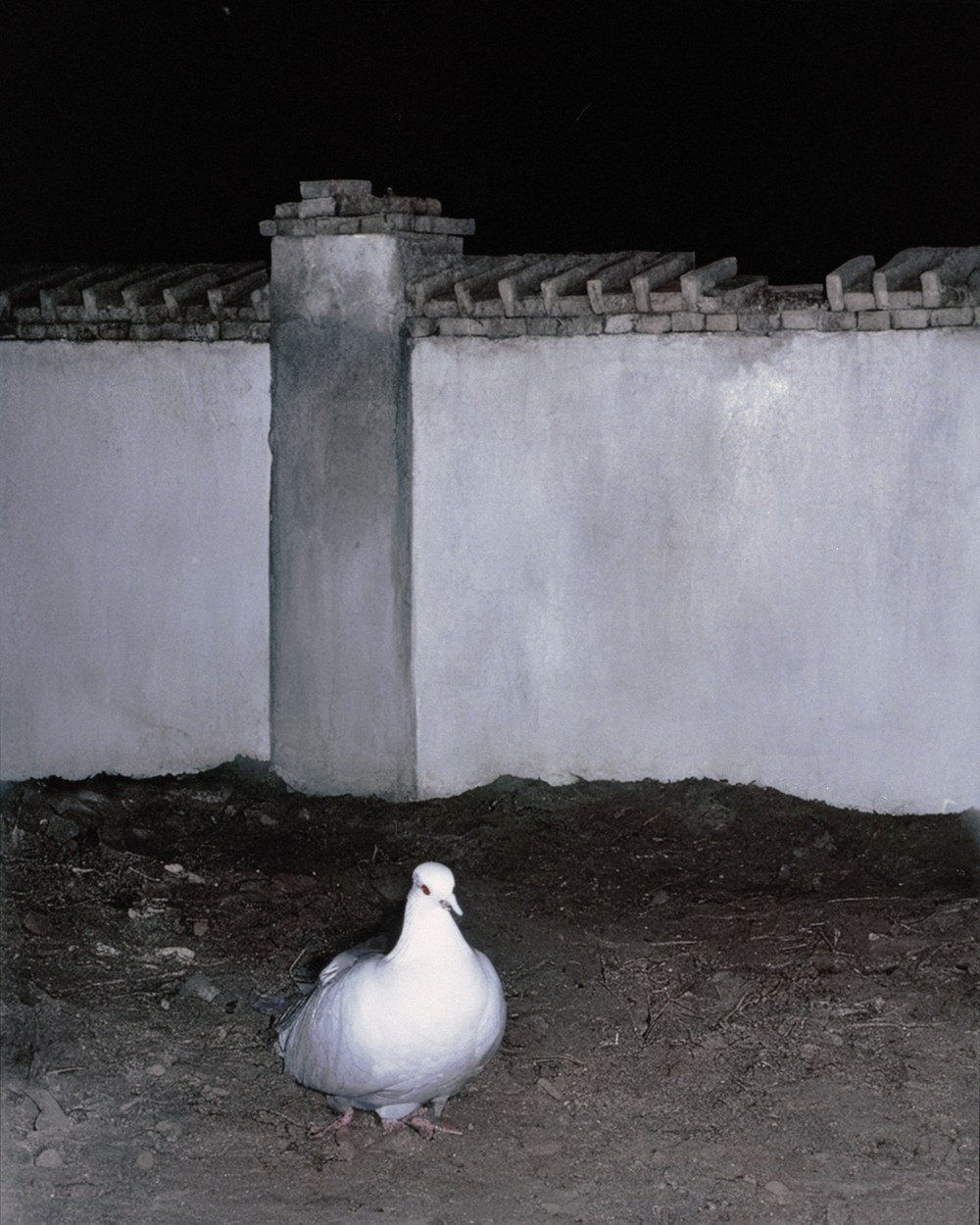
The frame is an ornate, antique-style silver frame, the kind that looks made for a portrait painting, which I found and bought on Mercari. Inside is not an oil portrait but a single image like a portrait photograph of a bird standing against a white backdrop. A portrait frame is meant for someone with a name; a white-backdrop photograph is meant to record people, products and specimens under the same conditions. Between those two mismatched formats, one pigeon stands with a look that asks why it is here. Before any reasoning, I liked how out of place it was.
Beside the frame, the original video loops on an iPhone, and about 8,000 comments are printed on 67 m of 80 mm thermal receipt paper. A receipt is proof that a transaction took place. Here each comment is treated as a signature attesting that the pigeon was there. A “it was there” written in full knowledge of the joke is accepted in full knowledge of the joke. A photograph was once the evidence that something had been there. Here the evidence came first, and the photograph went into the frame afterwards.
I made the pigeon, but the ones who named it and made it real were the people who saw it. A bird that never existed came to have existed, countersigned by people who knew.